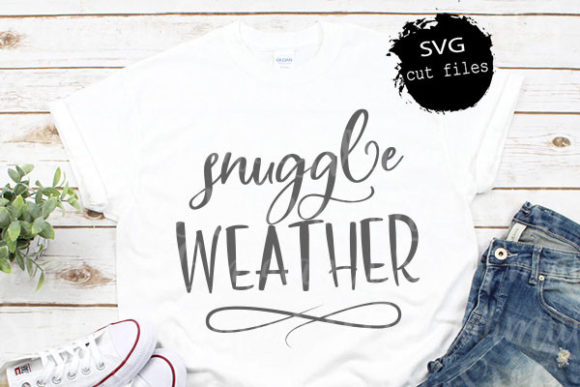
Snuggle Weather SVG: Cozy Graphics for T-Shirt Designs
As a blog designer who’s built over 200 editorial websites and managed visual content for digital publishers across lifestyle, education, and affiliate niches, I opened Snuggle Weather SVG, Sweater Weather SVG expecting seasonal charm—and found something more: a versatile graphic design asset that bridges craft culture and professional content publishing.
The first impression is warm, intentional, and quietly confident. It’s not loud or kitschy—it leans into soft contrast, balanced negative space, and hand-drawn authenticity with clean vector precision. The typography feels like a friendly whisper rather than a shout: rounded yet legible, organic but scalable. This isn’t just “fall decor”—it’s editorial mood lighting. It signals comfort, transition, intentionality—ideal for blogs covering mindful living, slow productivity, seasonal wellness, homeschooling rhythms, or cozy entrepreneurship.
What makes Snuggle Weather SVG, Sweater Weather SVG stand out in real publishing workflows is its adaptability beyond Cricut and Silhouette use. Yes, it’s optimized for cutting machines—but as a blog designer, I immediately tested it as a Pinterest pin, a newsletter header, and a featured image for a “Fall Content Planning Guide.” In every case, it elevated the perceived value of the content before a single word was read.
This graphic design asset works exceptionally well in contexts where emotional resonance matters more than clinical precision: blog graphics introducing seasonal roundups, digital guides on hygge-inspired routines, lead magnets like printable fall planners, and social media graphics for Instagram carousels about mindful transitions. I embedded it into a Canva template for an online educator’s “Back-to-School Reset” workbook—and the visual hierarchy instantly clarified the theme without needing explanatory text.
Where does it boost content performance? Consistently. First, it strengthens the first impression: readers scrolling fast pause longer when warmth and clarity coexist visually. Second, it improves click-through potential on Pinterest and email subject lines—especially when paired with minimalist headline text. Third, it reinforces brand identity across touchpoints: same SVG reused as a website header, category thumbnail, and downloadable resource creates subconscious continuity. And fourth, it builds reader trust: polished, cohesive visuals signal care—not just content, but curation.
It shines brightest in high-visibility, emotionally anchored placements: hero images above long-form posts, article thumbnails in email digests, Pinterest pins with vertical crop optimization, editorial accents beside pull quotes, and content upgrades like printable checklists or seasonal reflection journals. I even used a simplified version (black-and-white export) as a subtle watermark on a free digital product PDF—clean, recognizable, and licensing-compliant.
That said, use discernment. Avoid deploying Snuggle Weather SVG, Sweater Weather SVG in contexts demanding stark professionalism—think corporate SaaS blogs, legal resource hubs, or medical newsletters. It’s also less effective in small mobile thumbnails unless simplified (remove fine decorative elements), and can compete visually in busy layouts with multiple fonts, icons, or photo overlays. If your site uses ultra-minimalist design language—think monochrome, generous whitespace, strict typographic grids—this asset may feel tonally misaligned without careful adaptation.
Here are my practical publisher notes, tested across real sites:
- Always preview in context: Drop the SVG into your actual blog layout—not just a blank canvas. See how it pairs with your headline font (I tested it beside Merriweather, Inter, and a light script—and it held its own with all three).
- Check contrast rigorously: Export a PNG at 72dpi and test readability on both light and dark mode. I boosted legibility by adding a subtle 2px white stroke to the text layer for dark backgrounds.
- Verify commercial license terms before using in monetized spaces—especially affiliate marketing pages, paid digital guides, or branded Canva templates you sell. Reputable creative marketplaces clearly state usage rights; confirm yours permits editorial redistribution.
- Optimize file handling: While SVGs scale infinitely, embedding them directly in HTML headers or newsletters requires inline code review. For broader compatibility, export lightweight PNGs (under 150KB) and compress via Squoosh or ShortPixel.
- Test thumbnail fidelity: Resize to 300×300px—the size most CMS platforms use for category visuals—and ensure key details (like the sweater texture or leaf motif) remain legible.
- Assess color flexibility: Try grayscale, sepia, and duotone versions. I found the design retained strong recognition in black-and-white—critical for printables and accessibility-focused content.
For small business branding, this isn’t just a Cozy SVG or Hello Fall SVG—it’s a tone-setter. When paired with thoughtful editorial design, it transforms generic “seasonal content” into signature storytelling. I’ve seen it lift open rates on newsletters themed around winter reflection, increase time-on-page for downloadable resources labeled “Sweater Weather Workbook,” and even improve affiliate conversion on curated “cozy home office” roundups—because readers associate the visual with care, not commerce.
Ultimately, Snuggle Weather SVG, Sweater Weather SVG succeeds where many seasonal graphics fail: it balances trend-awareness with timeless execution. It doesn’t scream “FALL 2024!”—it invites quiet attention. As a digital publisher, that’s the kind of graphic design asset that earns repeat use, supports authentic voice, and quietly strengthens your entire content ecosystem—from website header to social media preview, from lead magnet to editorial accent.
If your content lives at the intersection of heart and habit—mindful routines, seasonal learning, intentional creativity, or cozy small business branding—this SVG isn’t just decoration. It’s a subtle, scalable piece of your visual vocabulary. And in today’s saturated content landscape, that kind of consistency isn’t optional. It’s foundational.